How to read Japanese designer sizing (1, 2, 3, 4)
If you have ever picked up an archive jacket labelled "3" and wondered what it means, you are not alone. Japanese designer sizing is one of the most common questions we hear at H5 lab. This guide explains how numbered sizes work, why they vary so much, and how to make sure a piece fits before you buy it.
Numbered sizes
Many Japanese labels, including lines from Issey Miyake, Yohji Yamamoto and Comme des Garçons, use numbers instead of letters. In broad terms, sizes run from 1 upwards, with 1 the smallest. Some lines go up to 4 or 5. A loose and very approximate comparison is that 1 is close to small, 2 to medium and 3 to large, but this is only a starting point. Every brand and every line has its own block, and a piece designed to be oversized will measure much larger than its number suggests.
Why sizes vary
Different lines, different fits. A main line jacket and a diffusion line jacket from the same house may fit very differently even if they carry the same number.
Intentional volume. Japanese designers often design volume into a garment. A size 1 coat may be meant to fall loosely on most bodies.
Changes over time. Sizing blocks change between decades. An archive piece from the 1990s may not match a newer piece with the same size.
Men’s and women’s lines. Many pieces are worn by anyone, but the original line affects shoulder width and length.
Measure, don’t guess
The most reliable method is to compare measurements with a garment you already own and love. Lay your own piece flat and measure:
Chest, from armpit to armpit, then double it. Shoulders, from seam to seam. Length, from the highest point of the shoulder to the hem. Sleeve, from the shoulder seam to the cuff. For trousers, measure the waist, rise, inseam and leg opening.
Then ask the seller for the same measurements of the archive piece. A difference of one or two centimetres is rarely important; a difference of five or more usually is.
Our notes on fit
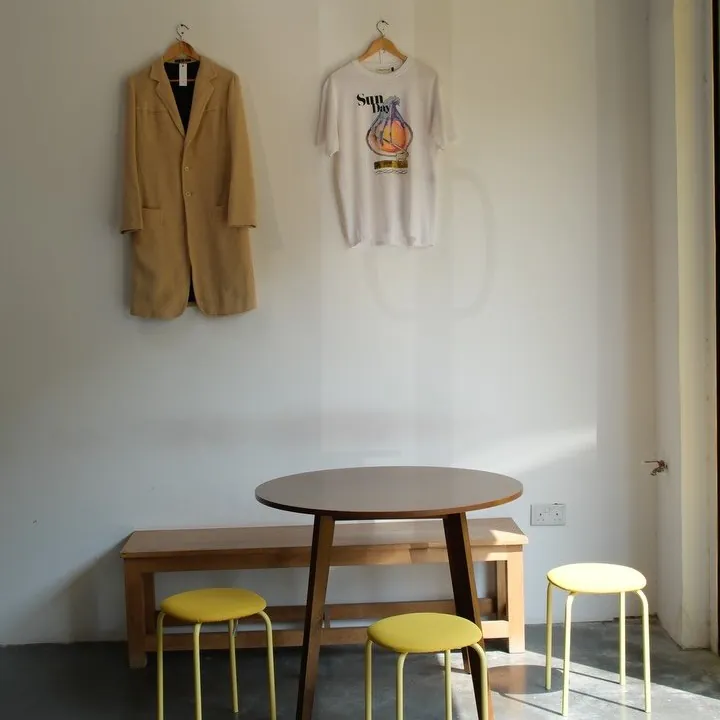
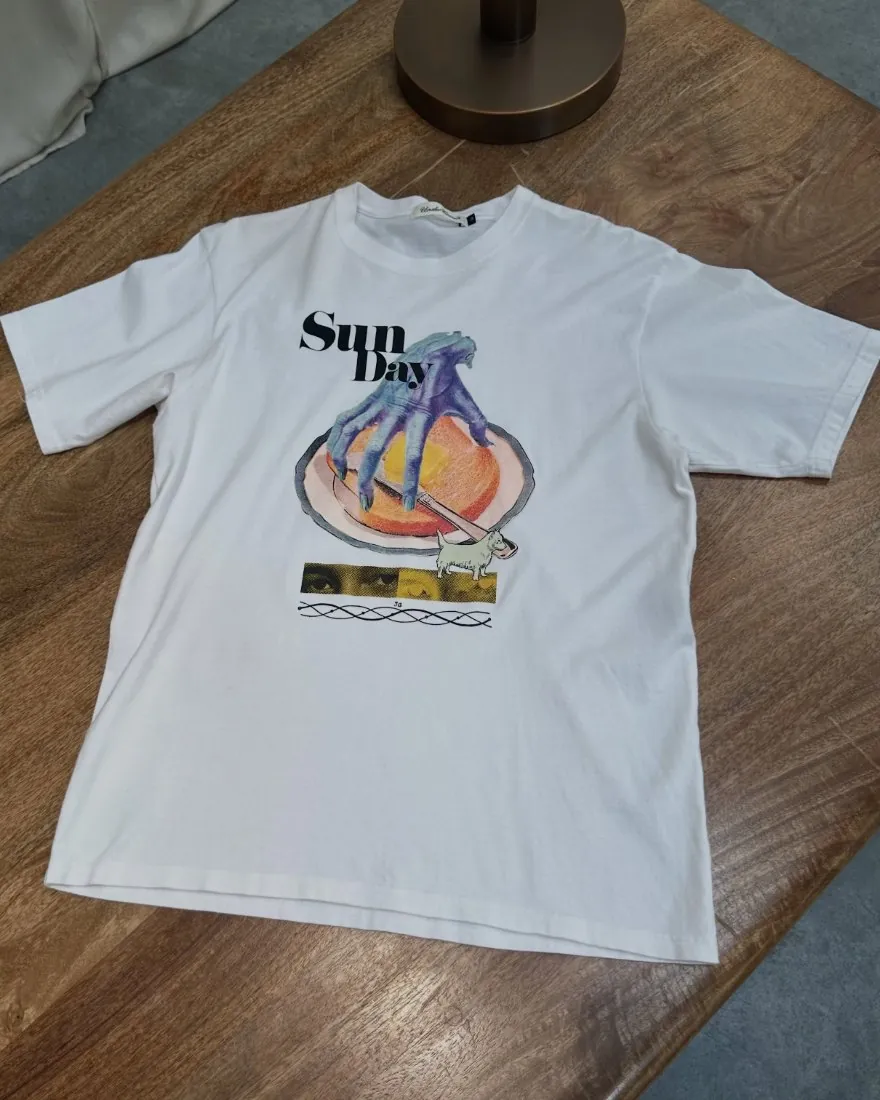
When we list a piece, we try to describe how it actually fits. For example, we recently listed a Sophnet blazer and trousers tagged XL that fit like a large, and graphic t-shirts in size 3. If you want more detail, send us a direct message and we will measure the piece for you.
Shoulders first, then length
For jackets and coats, shoulders matter most because they are the hardest point to alter. If the shoulders fit, sleeves and length can often be adjusted by a good tailor, although with archive pieces it is usually better to keep the original proportions. For shirts and tops, look at chest and length. For trousers, the waist and rise are key; many Japanese trousers are long by design and can be worn with a break, cuffed or rolled.
Sizing for t-shirts and graphic pieces
Vintage and designer t-shirts follow their own rules. Older t-shirts are often narrower and longer than modern cuts, while Japanese designer t-shirts can be boxy and short. Our graphic t-shirts in size 3, for example, sit closer to a large in most Japanese labels. For t-shirts, chest width and body length are the two numbers that matter most. Shrinkage is another factor: cotton that has already been washed many times is unlikely to shrink further, while newer pieces may still change slightly after the first wash.
Trying on in store
Nothing replaces trying a piece on. Japanese designer clothing often looks completely different on the body than on a hanger. Move around, lift your arms, sit down. A garment that seems too large may suddenly make sense once you see how it drapes.
Tips for buying online or by message
Ask for measurements and photos of the size label and care label. Ask how the piece compares to a standard size. Keep a note of your own measurements on your phone so you can compare quickly. And remember that archive pieces are one of one: if something fits well, it may be worth taking the chance.
Visit H5 lab at Warehouse 32A, Lane 4, Alserkal Avenue, to try pieces on, or message us on Instagram for measurements.