Archival Japanese fashion in Dubai: a buyer’s guide
Archival fashion has moved from a niche corner of the internet into the mainstream, and Dubai now has a small but serious community of people who collect it. If you are new to the idea, the vocabulary alone can be confusing. This guide explains what archive means, why Japanese designers sit at the centre of it, and how to buy with confidence, whether you shop with us at H5 lab or anywhere else.
What does "archive" actually mean?
In the strict sense, an archive piece is a garment from a past collection of a designer, often from a specific season that is remembered for its ideas. In everyday use, the word has stretched to cover any older designer piece that is no longer produced and that still says something about the designer’s thinking. The point is not age for its own sake. A good archive piece shows a moment in a designer’s work: a new way of cutting, a material that was experimental at the time, or a silhouette that later became influential.
That is why archival shopping feels different from buying new. There is usually only one of each item, in one size, in one condition. You are not choosing from a range; you are recognising something when you see it.
Why Japanese designers?
When Rei Kawakubo of Comme des Garçons and Yohji Yamamoto first showed in Paris in the early 1980s, their collections challenged almost everything Western fashion took for granted: fit, colour, finish and even the idea of what was beautiful. Issey Miyake, working from Tokyo, spent decades developing techniques that joined craft and technology, most famously his garment pleating. Together, these three designers form the pillars of the selection at H5 lab, because their work rewards close looking and holds its value as ideas, not just as products.
What to check before you buy
Labels and tags. Look at the main label, the size tag and the care label. Japanese labels often include a composition tag in Japanese and a product code. These details help date a piece and confirm which line it comes from.
Construction. Turn the garment inside out. Seams, finishing and the weight of the fabric tell you a lot. Deliberately raw or unfinished details are part of the design language of some designers, so judge them in context rather than as defects.
Condition. Check underarms, collars, cuffs and hems. Small signs of wear are normal for older pieces; what matters is that you know about them before buying. A trustworthy seller will point them out.
Fit. Archive pieces were rarely made to fit closely. Volume is often intentional. Try the garment on and look at how it moves, not only how it looks in a mirror when you stand still.
Understanding the lines
Each of the big Japanese houses works through several lines, and knowing them makes browsing easier. Comme des Garçons has its main collection alongside lines such as Comme des Garçons Homme Plus and the more casual PLAY. Yohji Yamamoto has his main line and Y’s, the label he founded first. Issey Miyake has the main line, Pleats Please and other projects from the studio. We explain these in more detail in separate journal entries.
Building a wardrobe slowly
The appeal of archive clothing is that it can be worn for years. Rather than buying many pieces at once, many collectors start with one strong item that fits easily into what they already wear: a black tailored jacket, a pleated top, a simple shirt with an unusual detail. From there, a wardrobe grows around pieces that work together. This approach is also kinder to the planet, because it keeps well-made clothing in use rather than buying new pieces that will be discounted at the end of the season.
Caring for archival pieces
Follow the care label first. Many pieces benefit from gentle handling: cold hand washing or careful dry cleaning, drying flat or on a wide hanger, and storing away from direct sunlight. Pleated garments need their own approach, which we cover in our guide to Issey Miyake Pleats Please. Keep shoulder shapes supported and avoid thin wire hangers for tailoring.
Buying archive pieces in Dubai
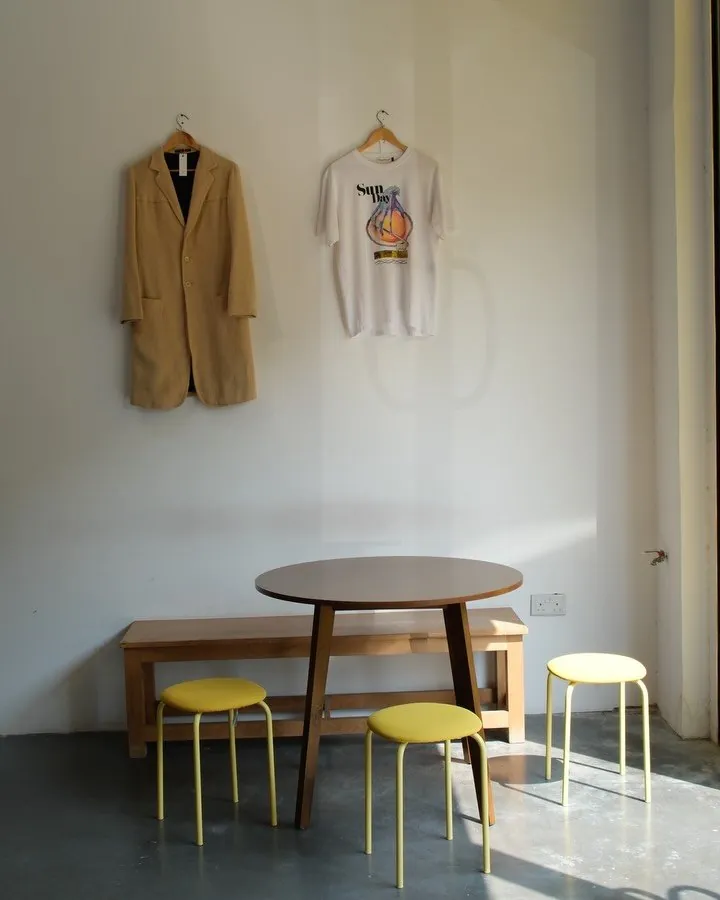
Dubai’s climate shapes what people wear, and many Japanese designers work well here: breathable fabrics, loose silhouettes and garments that layer lightly in the cooler months. At H5 lab, each piece we list on Instagram comes with its size and price, and we are happy to describe how it fits or send more details by direct message. Because every item is one of one, the best way to see the selection is to visit us in Warehouse 32A on Lane 4 of Alserkal Avenue.
If you are starting out, come in, try things on and ask questions. Archive shopping is about learning to see, and the conversation is part of it.